What Would Mary Do?
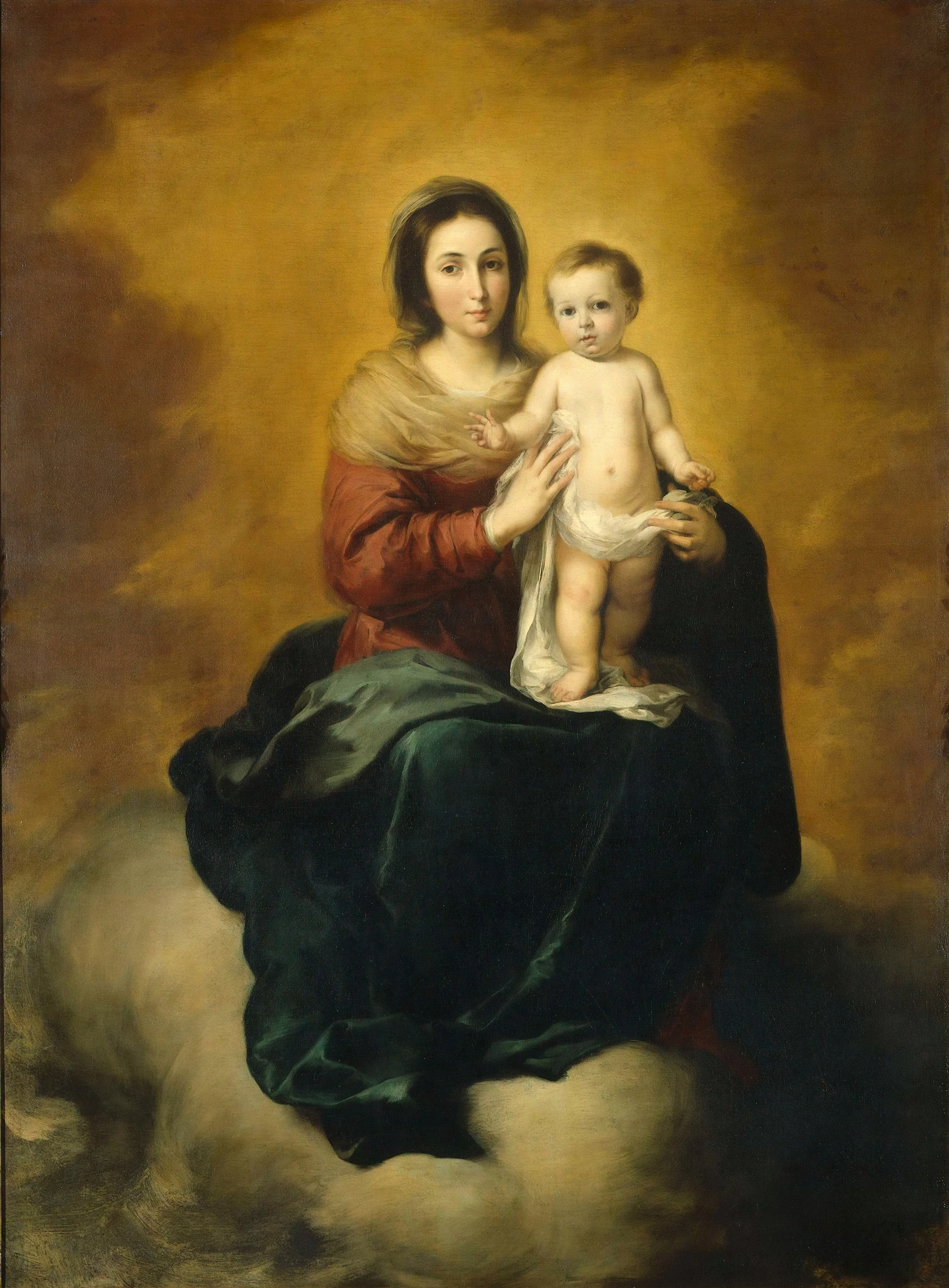
This post was written from a sermon I shared at Hamilton Elim Church on Mothers Day 2026. You can listen to the full sermon here.
We live in a world that is actively fighting for our attention. Devices designed by very clever people with a lot of money, engineered specifically to make sure we never have to sit with ten minutes of boredom. And unfortunately it's working.
Deep down, we all want more than that. We want to be present, but we just don't know how to drag ourselves out of it all. I think this need is not only a desire to be physically present, but also a deeply spiritual desire. We know that we are meant for more than what the distractions offer. We know that we can do better.
What does it actually look like to be truly present, to God and to the people around us, across a whole life?
Well, over the past few weeks I keep coming back to Mary.
Now I know that as (mostly) non-Catholics, we sometimes overcorrect on Mary by playing her down. But she plays a vital role in the story of God coming to earth. And I would argue that her experience is even more poignant for those of us who believe she was human, just like us. She negotiated bedtimes. She knew Jesus' favourite food and how he liked it prepared. She would have loved the early morning snuggles, as I do.
She just also happened to show up in this story in a way that changed everything. And what I want to write about today is not just that she kept showing up, but how.
1. With Surrender and Gratitude
The first time we really meet Mary she is met by the angel of God and gives her consent to bearing the son of God. God didn't share all the things that were going to happen. He didn't lay out the future and the pain and the triumph. He just asked her to trust him and she said yes.
She said yes with a lot on the line. As an unmarried pregnant woman she faced real consequences: social disgrace, rejection by her fiance, and the possibility of being put to death.
The next time we see Mary, she is singing the Magnificat, the longest set of words by a woman in the New Testament. She is unmarried and pregnant and travelling urgently to visit her relative Elizabeth, some scholars think partly for protection. But still, with everything uncertain and dangerous ahead of her, Mary opens her mouth and sings about God pulling kings off their thrones and lifting up the poor. This isn't a soft lullaby. This is a grateful, confident, trusting song of praise and gratitude.
She is a poor, unmarried, pregnant teenager from a village so small and insignificant that people joked nothing good could come from that region, and she looks at her situation and says: “I am blessed.” Not because life is easy, but because God has noticed her.
Mary didn't have the full picture, and she had a lot on the line. But she still said yes to that with gratitude and praise for God.
2. With Attentiveness and Trust
In the early life of Jesus, the little we have, we learn that Mary shows up with attentiveness. She ponders and treasures. Twice Luke notes that in the middle of overwhelming and confusing moments, Mary treasures things and ponders them in her heart. Two completely different kinds of overwhelming, same response.
This is not a settled peaceful season either. This family is moving, Bethlehem, Egypt, back to Nazareth. In the middle of all that displacement, all that chaos, Mary is paying attention. In a season that would have justified switching off, she stays present to what God is doing.
Pondering is almost the exact opposite of scrolling. Scrolling fills every gap whereas pondering utilises the gaps. I wonder what we're missing because we won't sit still long enough to notice the things that matter.
At the wedding in Cana, we learn that Mary shows up with trust, not fighting for control. When the wine runs out she brings it to Jesus. He says it's not his time. She tells the servants to do whatever he says. She doesn't contradict him, but she makes sure that if it's time, it'll be done. She holds the tension between his "not yet" and her deep obvious knowledge that he can help. And that tension is exactly the space where the miracle happens.
By now, Mary has built up enough trust in God and his faithfulness to her that she can sit in the gap between "not yet" and "he can.”
3. With Courage and Humility
The last two times we see Mary were quite possibly in the hardest seasons of her life.
At the cross, she is standing at the foot of a public execution of her beloved son in full view of the people who mocked him, the soldiers who nailed him, and the religious leaders who wanted him dead. I also believe she was most probably facing the death of an understanding. Why is God dying? Why would God give me his son and then let him die? Does this mean I was mistaken? What do I do now?
This is the priciest kind of presence. To stay when everything in you wants to look away. To not disengage when the pain is unbearable. To remain present to the thing you least want to face.
And then, after all of that, in one last mention, we find her in the upper room.
"All these with one accord devoted themselves to prayer, together with the women and Mary the mother of Jesus, and with his brethren." Acts 1:12-14
She has no title in this room. She is not listed as an apostle or a leader. She is just there, with the others, praying. The woman who was told "the Holy Spirit will come upon you" at the Annunciation is now waiting, with everyone else, for the Holy Spirit to come. She knows how to receive from God. She's done it before.
And that's the last picture the Bible gives us of Mary.
As Jesus leaves and sends the Holy Spirit, the calling shifts. Mary's unique physical calling to be Theotokos, the God-bearer, becomes the calling of every single follower of Jesus. We become bearers of God in our communities through the Holy Spirit living within us. When we say yes to God, when we allow him to have his way in our lives, in the same spirit as Mary, we become bearers of God.
"It is no longer I who live, but Christ who lives in me." Galatians 2:20
"Christ in you, the hope of glory." Colossians 1:27
Mary carried God physically into the world. We carry God spiritually into ours. She said yes in Nazareth. We need to say yes in the same way that she did.
I’m sure Mary didn't show up perfectly. She had questions. She had moments I'm sure she didn't understand. She had grief that would have flattened most if not all of us.
But across her whole life she brought valuable qualites to every situation she faced.
That's the lesson for us. I don’t think she exemplifies a dramatic gesture or a complete life overhaul. She simply showed a willingness to be surrendered to God, attentive to the people and situations around her, and faithful in the moments she was given.
I believe we are, each of us, called to be God-bearers.
Present, faithful, still saying yes.